What the Great Chicago Fire Taught America About Wooden Roofs
When people picture a cedar roof, they usually think of texture, warmth and the soft silver tone that wood takes on as it ages. Very few think about fire. Yet the story of wooden roofing in the United States is closely tied to one of the most famous disasters in American history. The lessons that came out of it still influence how wood roofs are made and tested today.
A City Made of Wood
In the years before 1871, Chicago was growing faster than almost any city in the world. It was also one of the largest lumber markets on the planet. Timber from the forests of Michigan and Wisconsin arrived by the boatload, and the city used it for nearly everything: houses, barns, churches, warehouses, and even sidewalks and street paving. Pine was cheap, easy to work, and seemed to be in endless supply.
The summer and early fall of 1871 were unusually dry. On the night of October 8, a fire broke out in a barn on the city’s West Side. Pushed by strong winds, it leapt across the Chicago River and tore through the business district and the North Side. It burned until rain finally helped bring it under control early on October 10. By then, roughly three square miles of the city were gone and about 17,000 buildings had been destroyed. Around 100,000 people had lost their homes, and an estimated 300 had died.
The Other Fire That Same Night
Here is a detail many people have never heard: on the very same night, a far deadlier fire swept through the area around Peshtigo, Wisconsin. That blaze killed well over a thousand people and is still considered the deadliest wildfire in American history. Two catastrophic fires broke out on the same evening. That shows how dry the whole region was that year, and how vulnerable wood-built communities could be when conditions lined up.
Fire Limits and a Heated Debate
After the fire, Chicago’s leaders faced a hard question: should the city keep building with wood? Their answer was a set of so-called fire limits, zones where new wooden buildings were no longer allowed. The debate was intense. Brick and stone cost more than lumber, and many working families feared they would be priced out of rebuilding their own homes. Protests followed, and the first rules left large areas exempt. It took another serious fire in 1874 before the limits were expanded.
The rebuilding that followed changed architecture forever. Brick, stone, terra cotta and iron took over downtown. Within little more than a decade, Chicago was experimenting with the steel-framed tall buildings that would become the modern skyscraper. Even National Fire Prevention Week, observed every October across the country, takes its timing from the anniversary of the Great Chicago Fire.
Wood Roofs Didn’t Disappear — They Evolved
What’s surprising is that wood roofing never went away. Cedar remained popular on homes in suburbs, small towns and rural areas because nothing else matched its look or its natural resistance to weather and decay. What changed over the following century was how roofs were tested and how the wood itself could be treated.
Today, roof coverings in the U.S. are commonly rated Class A, B or C based on standardized fire tests. These tests check three things:
- how well a roof resists flames spreading across its surface,
- how it handles a burning piece of wood dropped onto it,
- whether fire can get through to the deck below.
Class A is the highest level of resistance. Untreated wood typically sits at the bottom of that scale or carries no rating at all.
How Fire-Retardant Cedar Works
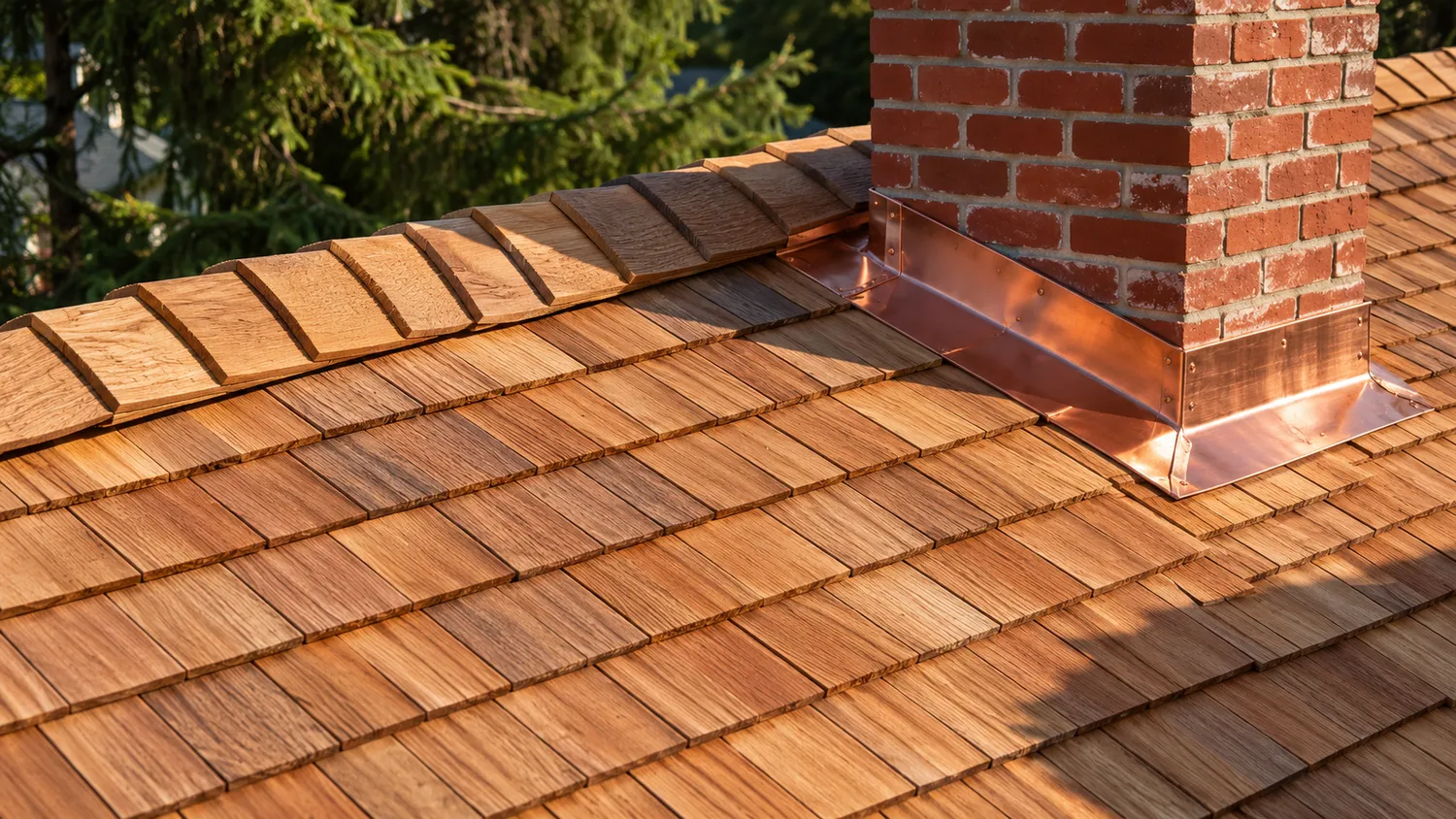
Modern fire-retardant cedar is very different from the raw pine of 1871. The shakes or shingles go into a pressure vessel. A vacuum pulls air out of the wood cells, and pressure then drives fire-retardant chemicals deep into the fibers. The wood is dried afterward so the treatment stays locked in rather than washing out with the first heavy rain.
When treated wood meets flame, the chemicals encourage it to form a layer of char on the surface. That char acts like insulation and slows the release of the flammable gases that actually feed a fire. Depending on the product and how the roof is assembled, treated cedar can reach a Class B rating. In some tested assemblies with special underlayment, it can reach Class A.
From History to the Present Day
Someone searching for cedar roofing near me Chicago today is looking at a material shaped by more than 150 years of hard lessons. Building codes are stricter, testing is standardized, and the wood itself can be engineered to behave very differently in a fire. Rules can vary between municipalities and even between neighborhoods, so it’s always worth checking what local codes require before choosing a roofing product.
The Great Chicago Fire is remembered mostly for the destruction it caused. But it also marks the moment Americans began thinking seriously about how buildings, and the roofs on top of them, should stand up to fire. Every treated cedar shake on a modern home carries a small piece of that history.